STRiPES
UX Design
Emotional Design
Healthcare

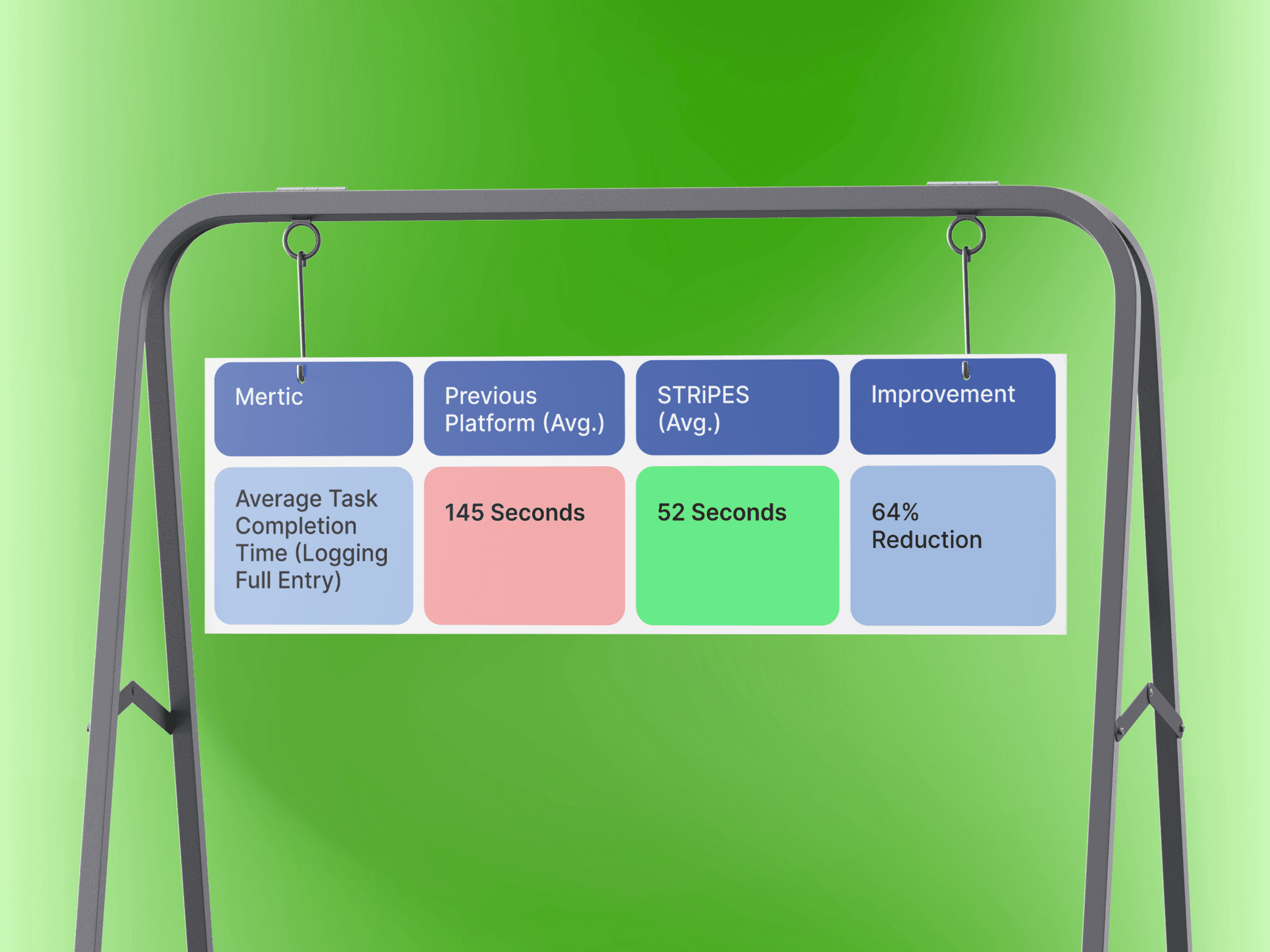
Our mission was to redesign a critical data platform for caregivers of patients with Phelan-McDermid Syndrome (PMS) a high-stakes clinical environment where scientific accuracy often clashes with the emotional exhaustion of the user. Result? A 64% reduction in task completion time and zero emotional cost for caregivers.
Year
Apr 2023- May 2024
Role
Lead UX Designer, Researcher, and UX Manager
TL;DR: Ethical UX in Clinical Research
As Lead UX Designer and PM, I directed a year-long strategic redesign of a data-logging platform for Phelan-McDermid Syndrome caregivers. By replacing clinical jargon with compassionate copy and optimizing task flows, we reduced data-entry time by 64% and eliminated the emotional toll on families, ensuring higher data integrity for the Blue Dye Test (BDT) medical study.
The Mission: Accuracy Through Empathy
The STRiPES project was a massive undertaking at the University of Miami UX Lab, collaborating with clinical doctors and medical researchers. Our goal was to build a robust digital tool for caregivers recording sensitive data for the long-term Blue Dye Test (BDT).
The Problem: The existing platform was built for researchers, not families. It used cold, clinical language that caused observable emotional discomfort during testing.
The Users: Caregivers like Evelyn, who are often time-stretched, anxious, and running on empty while managing a household and a patient with a complex syndrome.
The Challenge: How do we gather accurate, high-fidelity clinical data when the act of recording it increases the emotional burden on the user?
Discovery: The Usability Breakdown
Before diving into the redesign, we performed usability studies on the existing platform provided by the researchers. The results were immediate:
Emotional Friction: Terms like "Abdomen" and "Fecal Matter" caused distress.
Cognitive Overload: The BDT rules were a dense "wall of text," making errors nearly inevitable.
Time Sink: The complexity meant the time-on-task was dangerously high, threatening the entire long-term viability of the medical study.
Design Block I: The Gender-Neutrality Challenge
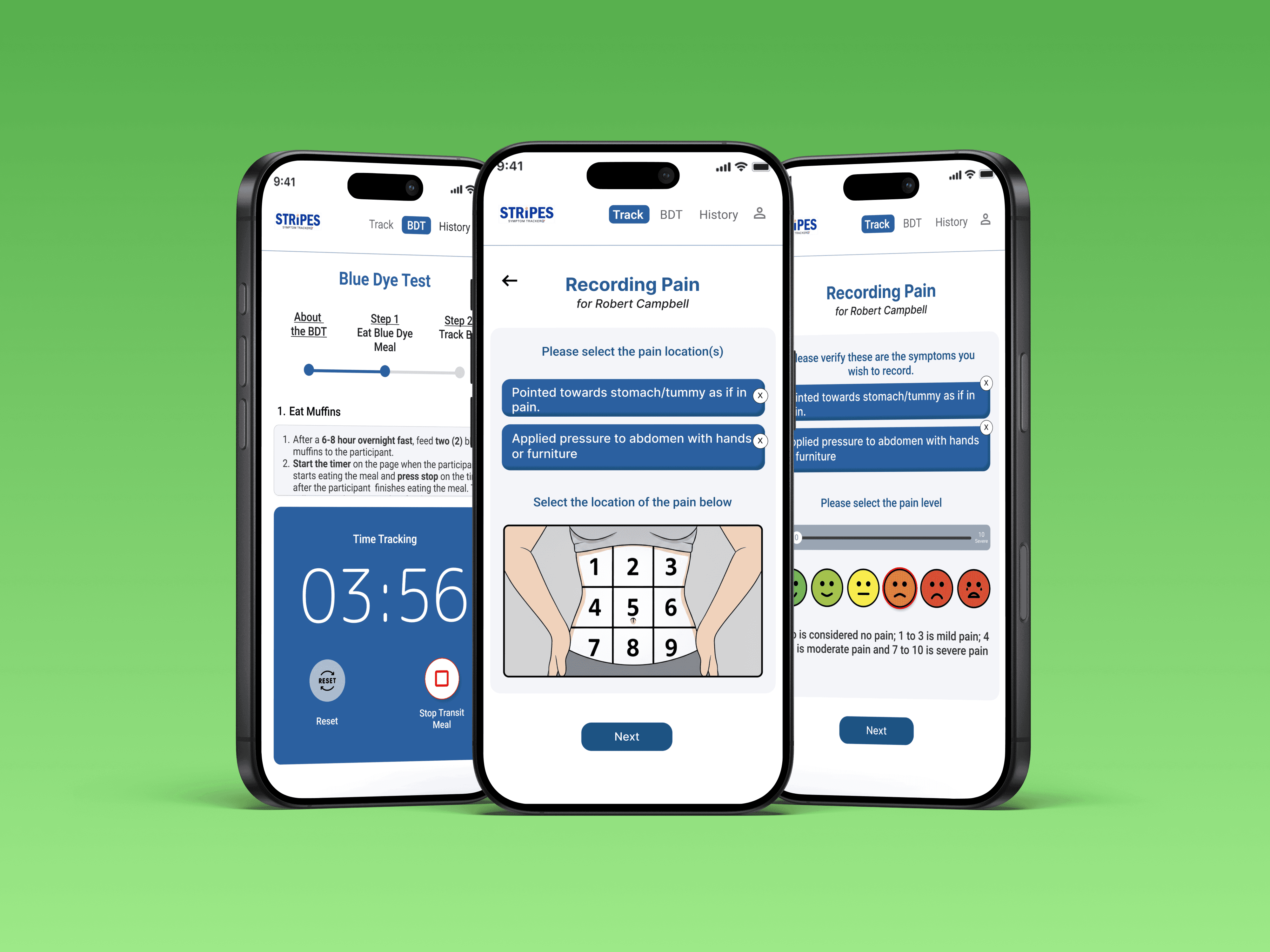
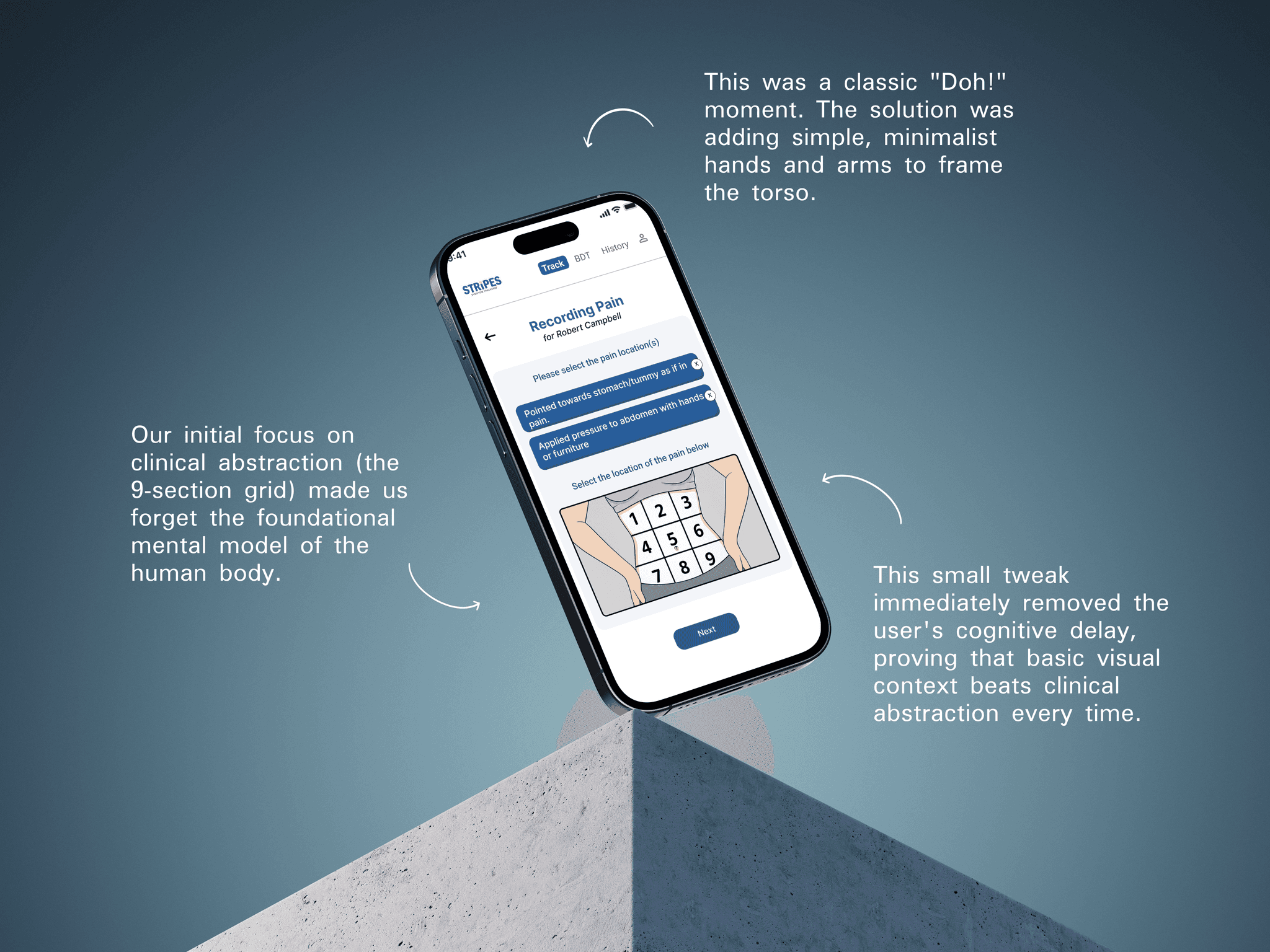
The clinical team required a pain-location map that was medically precise yet inclusive.
The Failure: I used AI and Photoshop to create a gender-neutral torso. However, in testing, caregivers were confused and took too long to recognize the shape.
The Realization: By focusing on clinical abstraction, we forgot the foundational mental model of the human body—the torso didn't have arms or hands.
The Solution: I added minimalist hands and arms to frame the torso. This small tweak removed the user's cognitive delay immediately, proving that basic visual context beats clinical abstraction every time.
Design Block II: The Wall of Rules and Cognitive Load
We knew caregivers wouldn't read dense instructions while under stress, so we had to simplify their mental burden.
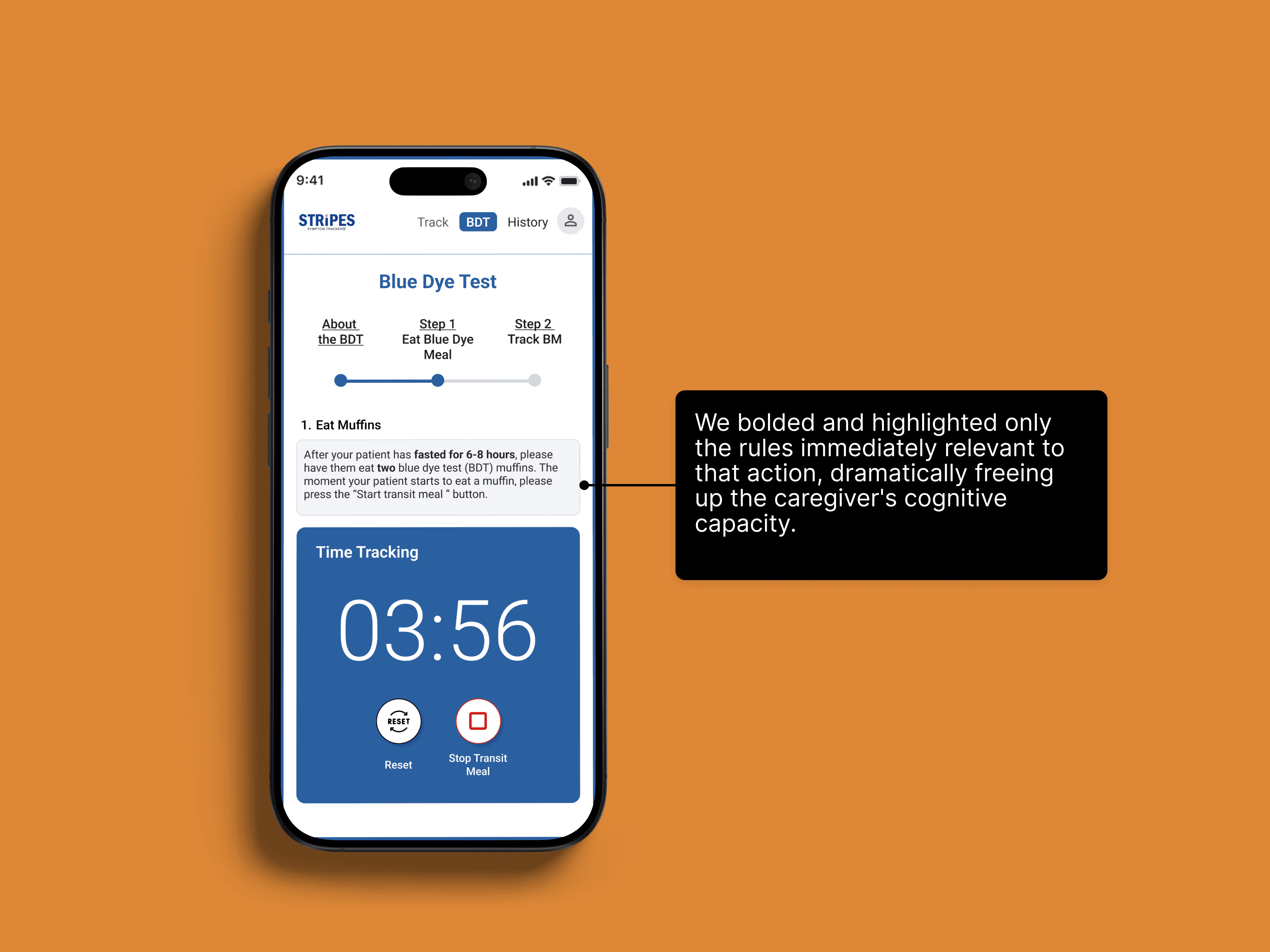
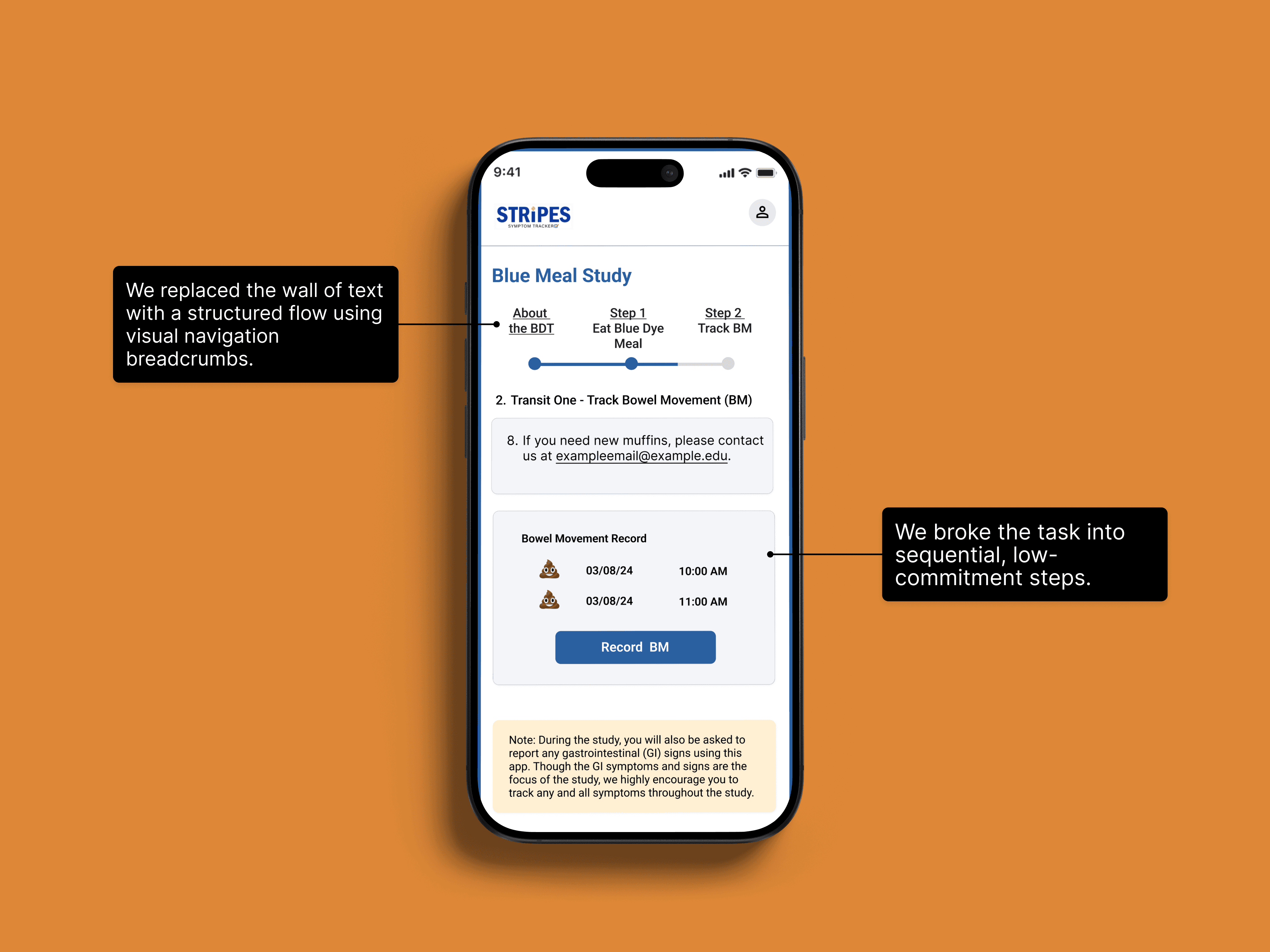
Sequential Steps: We broke the task into low-commitment steps, bolding only the rules immediately relevant to the current action.
Visual Breadcrumbs: We replaced the wall of text with a structured flow using visual navigation to show progress.
The iPhone Mental Model: Since caregivers were universally familiar with the iPhone clock, we mirrored that UI for the Blue Dye Meal stopwatch.
Context-Aware Buttons: The "Start Transit Meal" button changed to "Stop" only when active, and the "Reset" button appeared only after the action was complete.
Compassionate Copy & Clinical Mapping
Every design choice was made to support a user under duress.
Reframing Language: We traded clinical terms for gentler alternatives, such as "tummy" or "stomach" instead of "abdomen."
Visualizing Sensitivity: We adapted the rigid pain recorder into a compassionate visual—an illustrative, smiley-emoji based scale (shifting from happy green to distressed red). This allowed for quick, non-verbal input that still mapped directly to the 1-10 scale needed by researchers.
Continuous Consent: We included non-pressurizing notes and a constantly visible "Withdraw from Study" button, ensuring the caregiver always felt in control of their participation.
The Result:
Quantifiable Success
Our year-long obsession with ethical design and process optimization resulted in a platform that protected both the data and the human.
Key Takeaway
The STRiPES project showed me that Empathy is not a soft skill; it is a fundamental design constraint. Every calculated decision, from the WCAG contrast to the offline-first logic, was made to support the user under duress. This led directly to better usability, reduced error rates, and superior data integrity for the medical study.