Motorola Solutions
UX Research
B2B
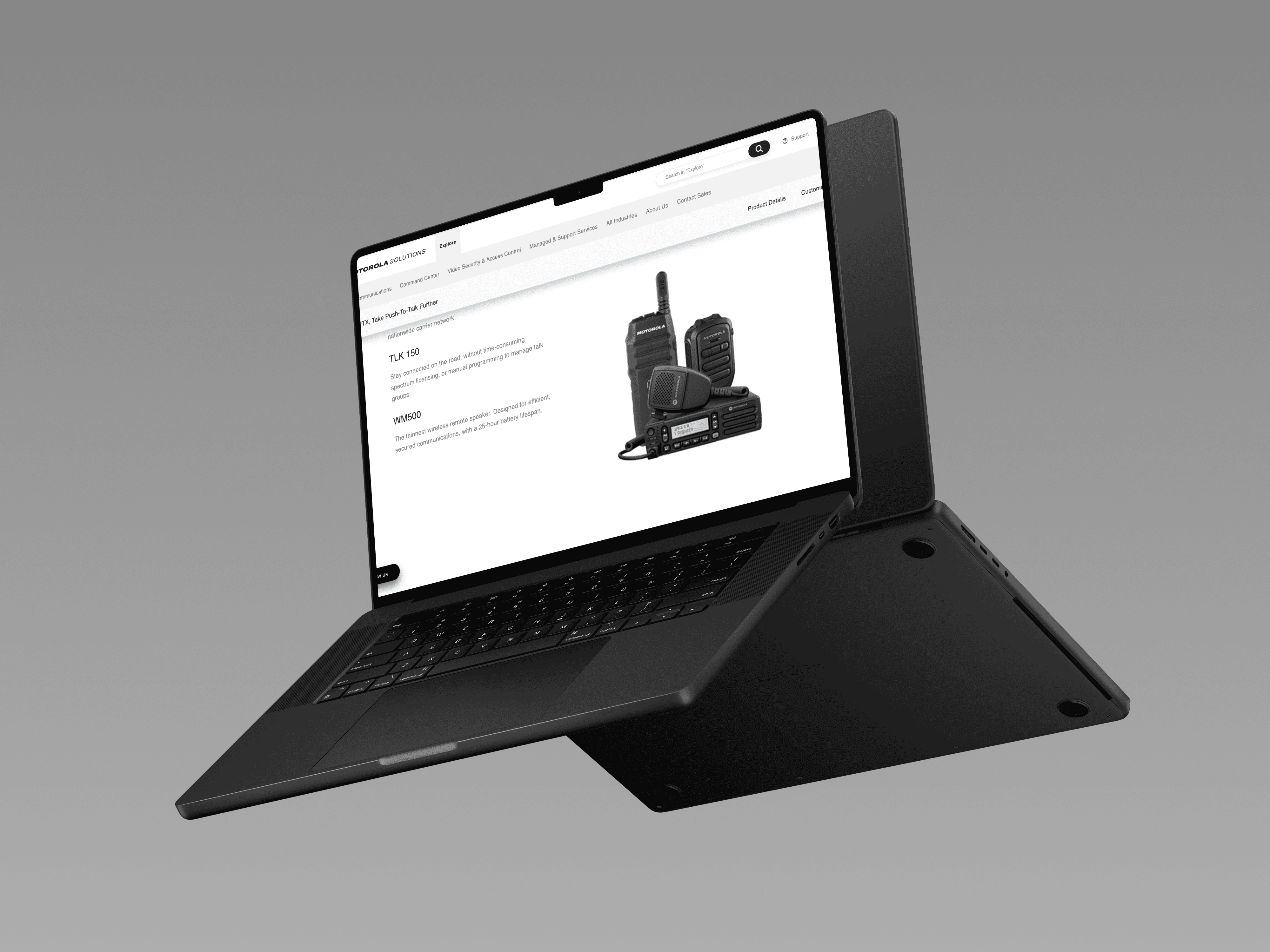
Conducted an end-to-end UX research initiative at Motorola Solutions to identify critical friction points within the WAVE PTX subscription platform.
Year
May 2023 – August 2023
Role
UX Research Intern
TL;DR: Optimizing Enterprise Workflows
I led a 3-month UX Research initiative at Motorola Solutions to audit the WAVE PTX subscription platform. By identifying manual bottlenecks and conducting competitive benchmarking against AWS and Azure, I provided strategic recommendations to reduce a monthly volume of 400+ support tickets and streamline partner management workflows.
The Mission
Rescuing the Partner Experience
WAVE PTX is a broadband communication service by Motorola Solutions that enables seamless team connectivity across devices. Despite its technical power, the platform faced high support volumes due to usability issues for partners and agents. As a UX Research Intern, my goal was to conduct an end-to-end analysis of the subscription lifecycle to improve efficiency.
Discovery
Uncovering the "Manual" Bottleneck
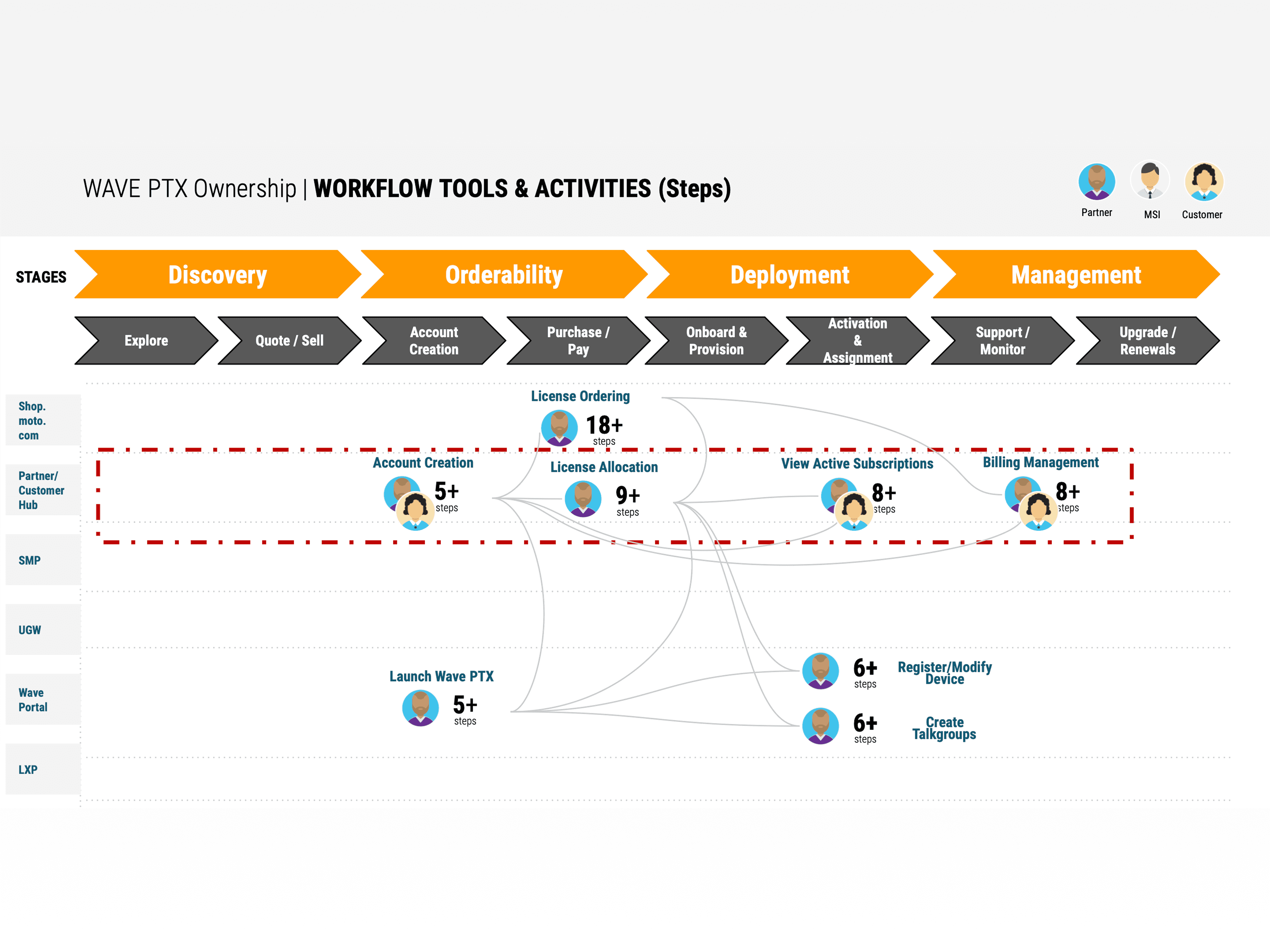
Through job shadowing and role-playing, I mapped the current workflow across six stages: Registration, Subscription Selection, Pricing/Contract, Payment, Confirmation, and Billing Support.
The Core Conflict
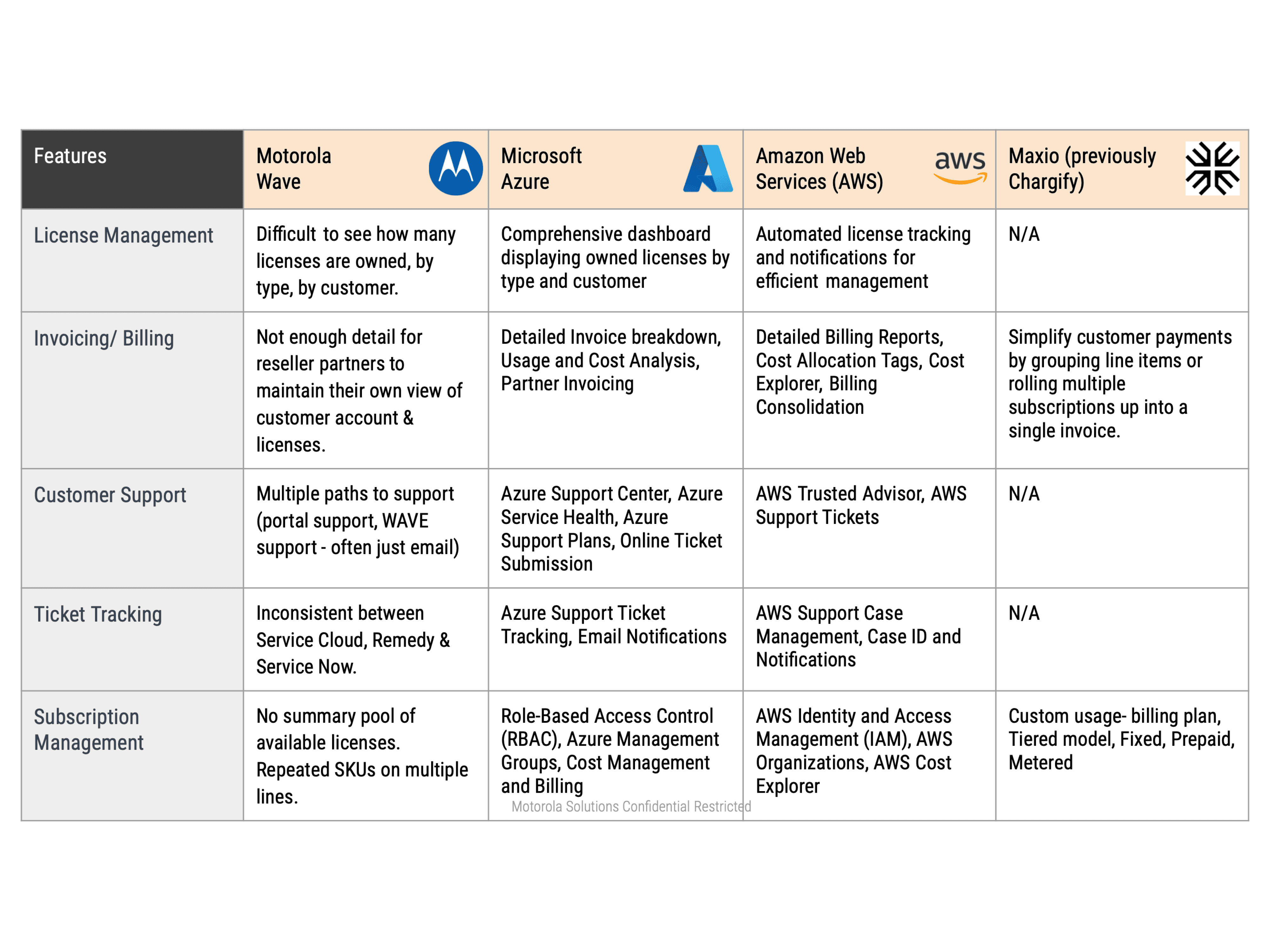
My research revealed that while competitors like Microsoft Azure and AWS offered automated dashboards and clear invoicing, Motorola partners were stuck in labor-intensive "manual mode".
Manual Tracking: Partners were manually keeping track of licenses and removing them upon expiration.
Fragmented Tools: Users were forced to juggle multiple systems (MOL, Greenfield, OCC) to manage a single order.
Information Blindness: There was no summary pool of available licenses, making it difficult to see what was owned by type or customer.
THE "AHA!" MOMENT
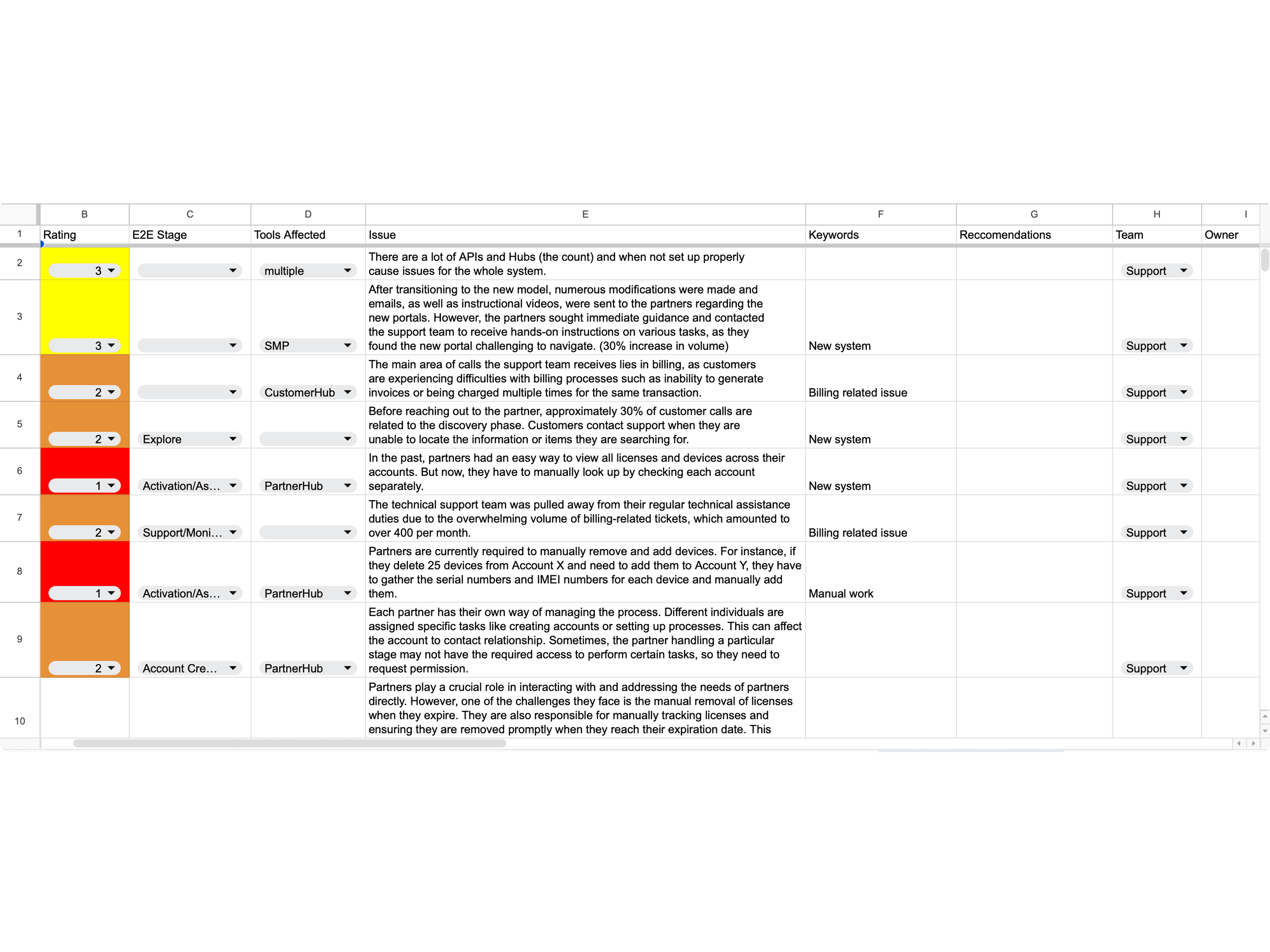
Data-Driven Friction Mapping
I translated hours of interviews into a Severity-Coded Insights Map to help stakeholders prioritize fixes.
The Research: Why was it failing?
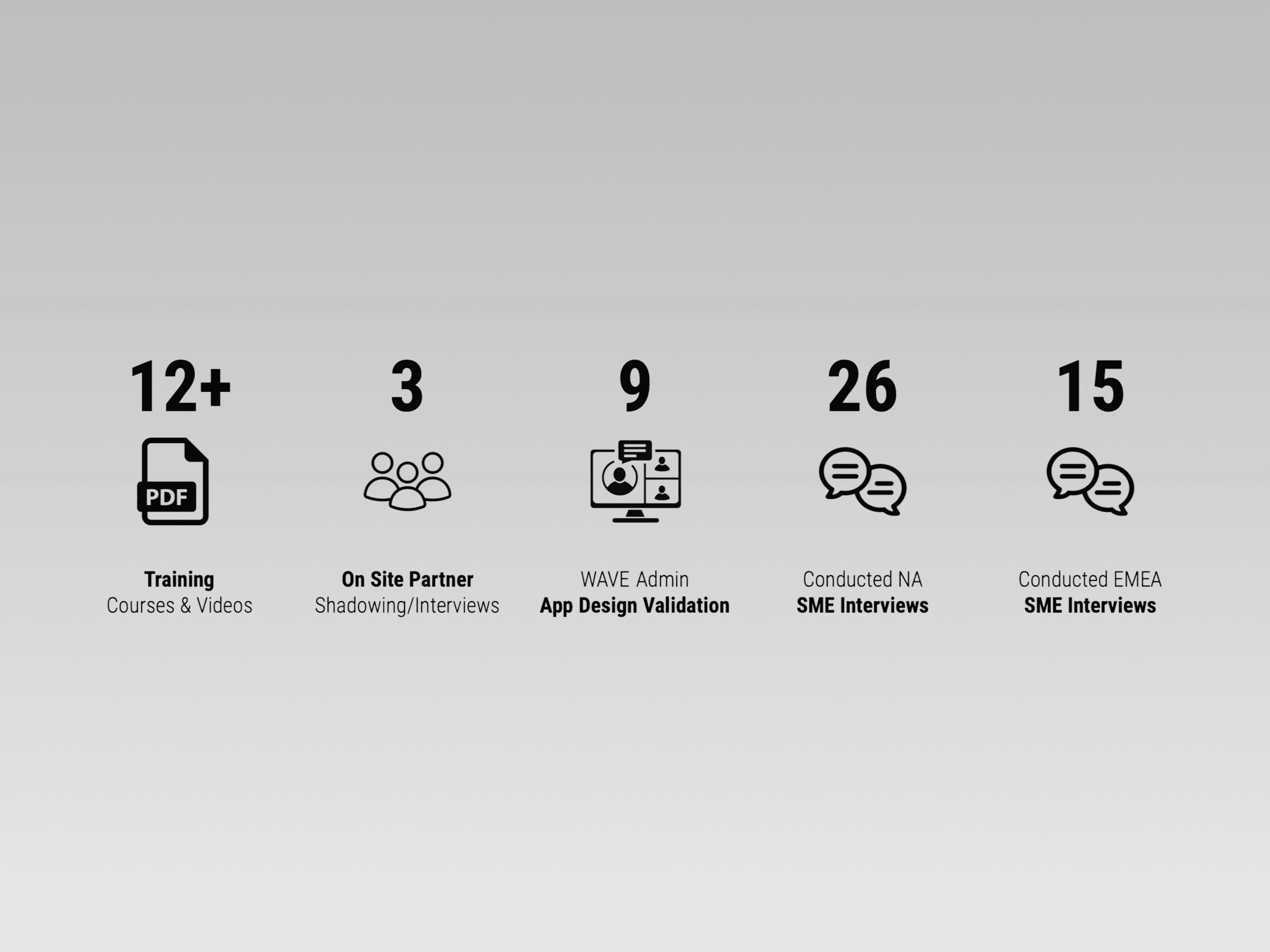
To find the "why" behind the tickets, I immersed myself in a 3-month deep dive that spanned from the US to Europe and India.
1. The Power User Phase (Training)
I completed 12+ training modules to understand the platform's technical architecture. This was crucial because I needed to know the "intended" path before I could understand why users were straying from it.
2. Global SME Interviews & Shadowing
I assisted and led interviews with international teams in India and EMEA. Shadowing these teams revealed a startling reality: they were using modern software but relying on "analog" workarounds.
The Spreadsheet Trap: Partners were manually tracking complex contracts using Google Sheets because the portal didn't provide enough visibility.
Manual Labor: When licenses expired, they had to be removed manually. If a partner needed to move 25 devices from one account to another, they had to gather and type in every serial and IMEI number by hand.
3. Competitive Benchmarking (AWS vs. Azure)
I conducted a detailed competitive analysis against Microsoft Azure and AWS to see how the industry leaders handled "Information Density".
The Gap: Azure and AWS provided automated license tracking and clear, grouped invoicing.
The Goal: I realized our users didn't need "flair"—they needed the high-contrast, information-dense utility found in these enterprise models
The Strategy: From Friction to Flow
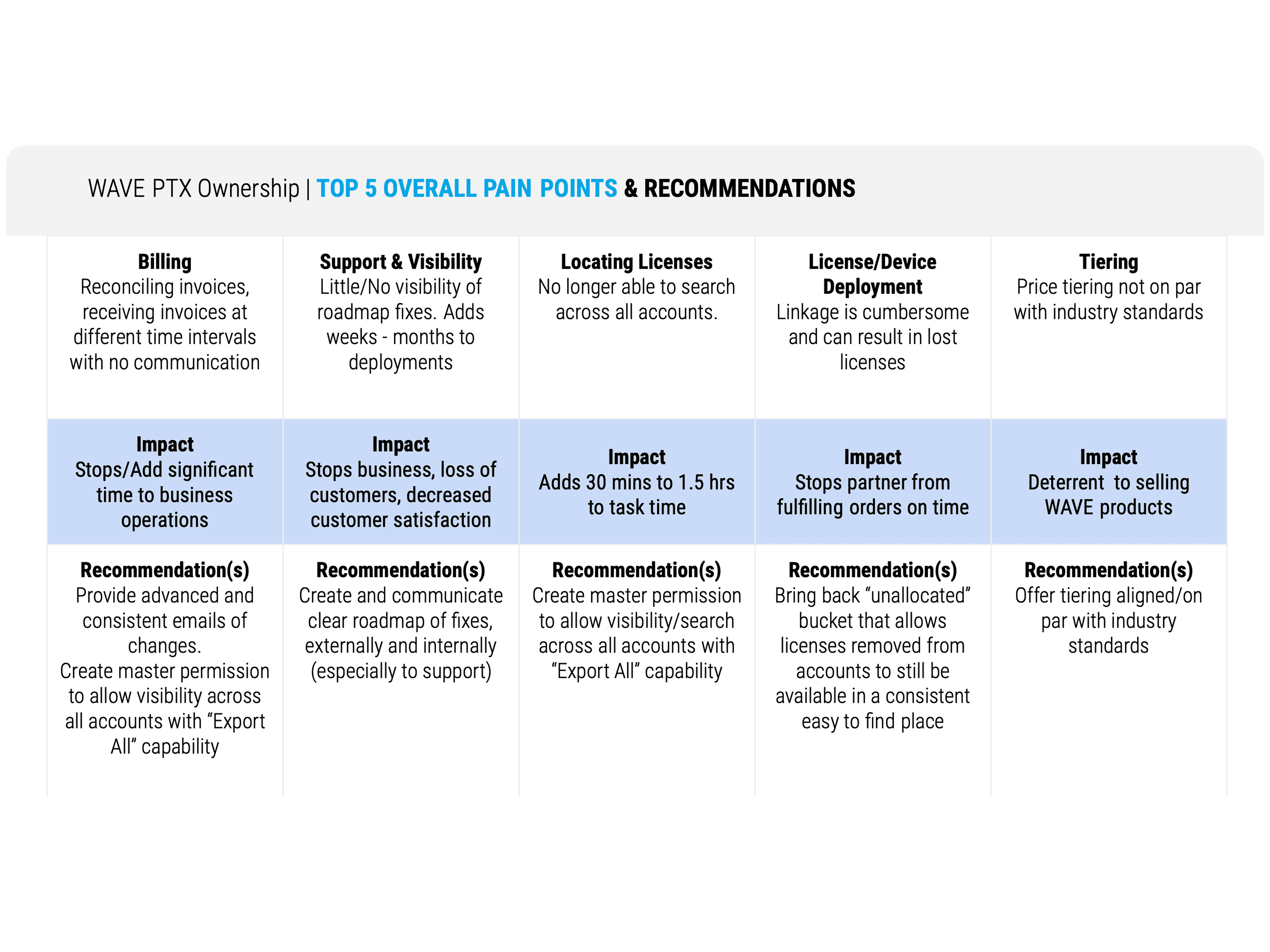
I presented these findings to stakeholders, focusing on recommendations that mirrored industry best practices to improve the CX (Customer Experience).
Automated Lifecycle: Recommended that licenses expire automatically to eliminate manual removal tasks.
Unified Dashboard: Proposed a redesigned dashboard—modeled after Azure—to provide 24/7 self-help resources and clear billing history.
Proactive Communication: Suggested automated notifications for upcoming invoices and billing changes to reduce "mystery" support calls.
Final Impact & Takeaway
This project wasn't just about "fixing a website"; it was about restructuring an enterprise workflow. By moving away from manual workarounds toward a Brutalist/Functionalist design approach, I helped identify how Motorola could:
Deflect hundreds of support tickets per month.
Empower partners with the same level of control offered by AWS and Azure.
Improve scalability, ensuring that as the platform grows, the support team doesn't have to.