Mondai
Product Design
UI/UX
Web
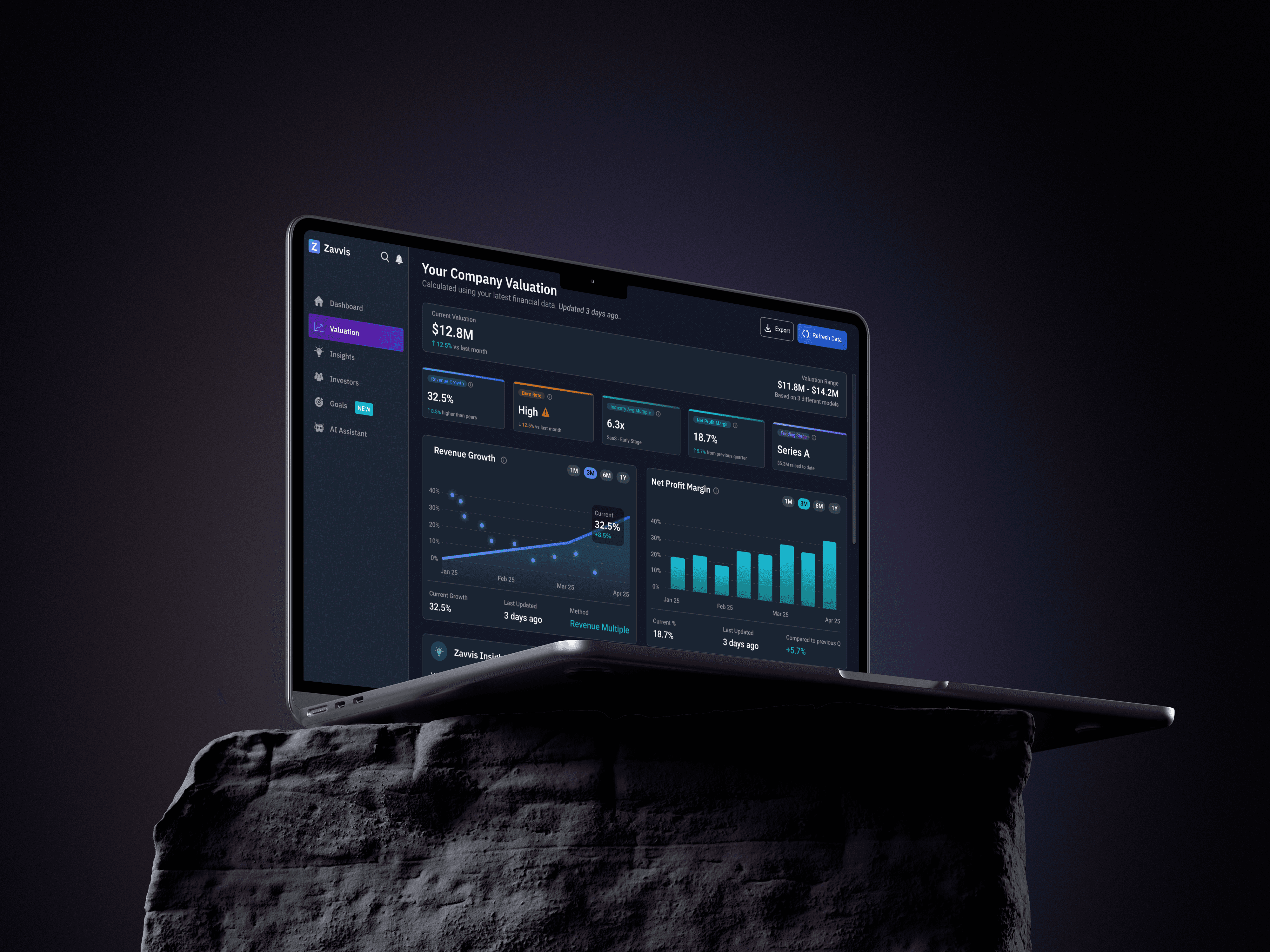
Mondai is an AI-equipped web application designed to challenge traditional higher education. Our goal was to create a space where students can learn, grow, and launch careers through a personalized AI-driven ecosystem, bypassing the need for a traditional university degree.
Year
April 2025 – Present
Role
Product Designer
Evolution Beyond the Classroom
The traditional university model is facing new challenges in a rapidly changing world. Mondai was designed as a solution: an AI-equipped platform designed to complement or provide an alternative to traditional higher education. Our goal was to build a space where students can learn and grow through personalized, AI-driven pathways that adapt to their unique goals.
As the Product Designer for the BUILDx team, I was responsible for ensuring this complex AI technology felt accessible, human, and intuitive.
A Research-Led Pivot
We inherited a library of mobile-first concepts, but we needed to validate if that was where our users truly wanted to learn.
The Conflict:
Should we build for "on-the-go" mobile use or "deep-focus" web sessions?
The Research:
I led an initiative to analyze user behavior. The findings were clear: for the deep, focused work required by Mondai, a web-based platform was the preferred environment.
The Result:
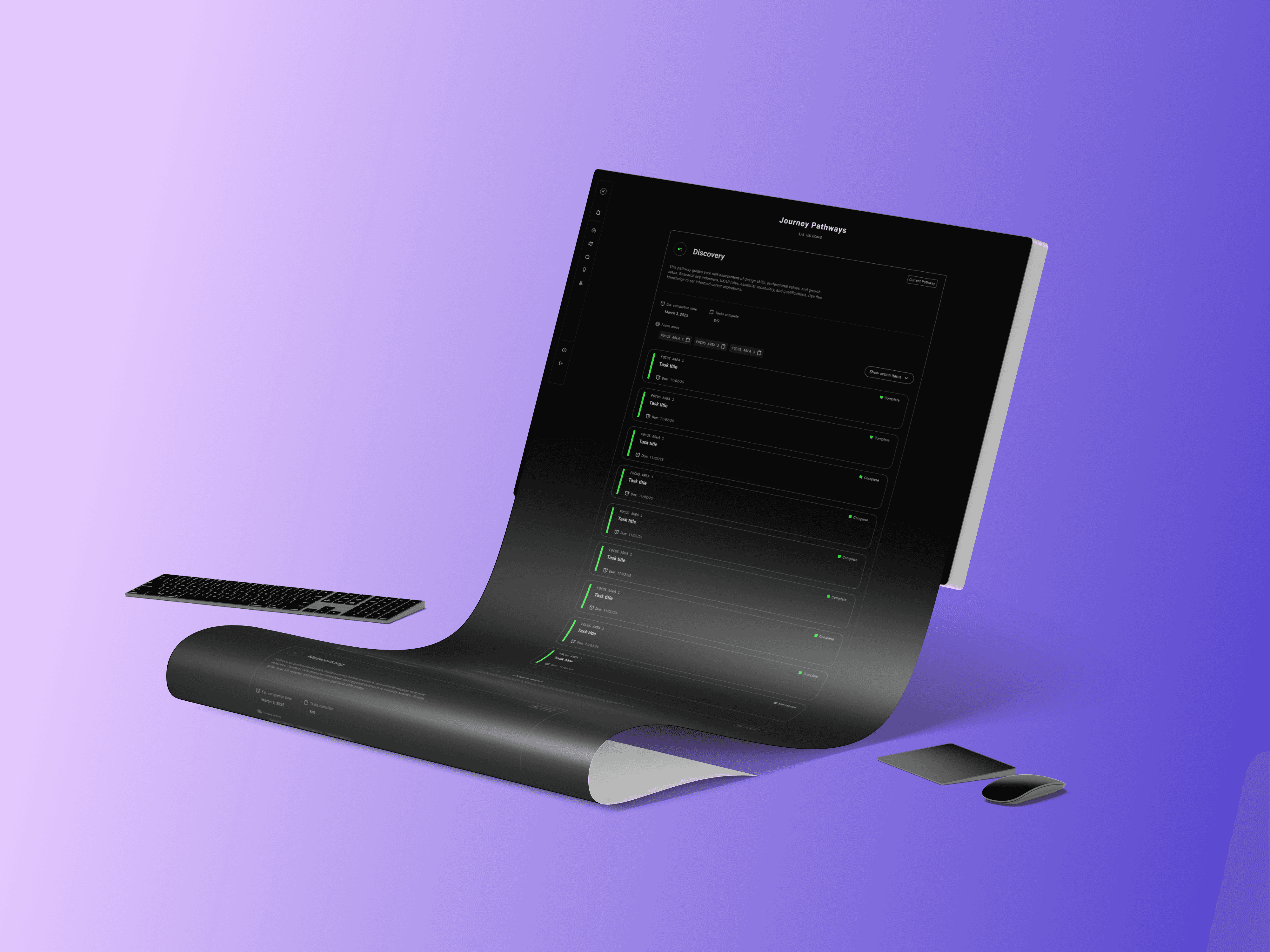
We made the strategic decision to pivot to a Web-based MVP, focusing our resources on the platform that offered the best educational experience.
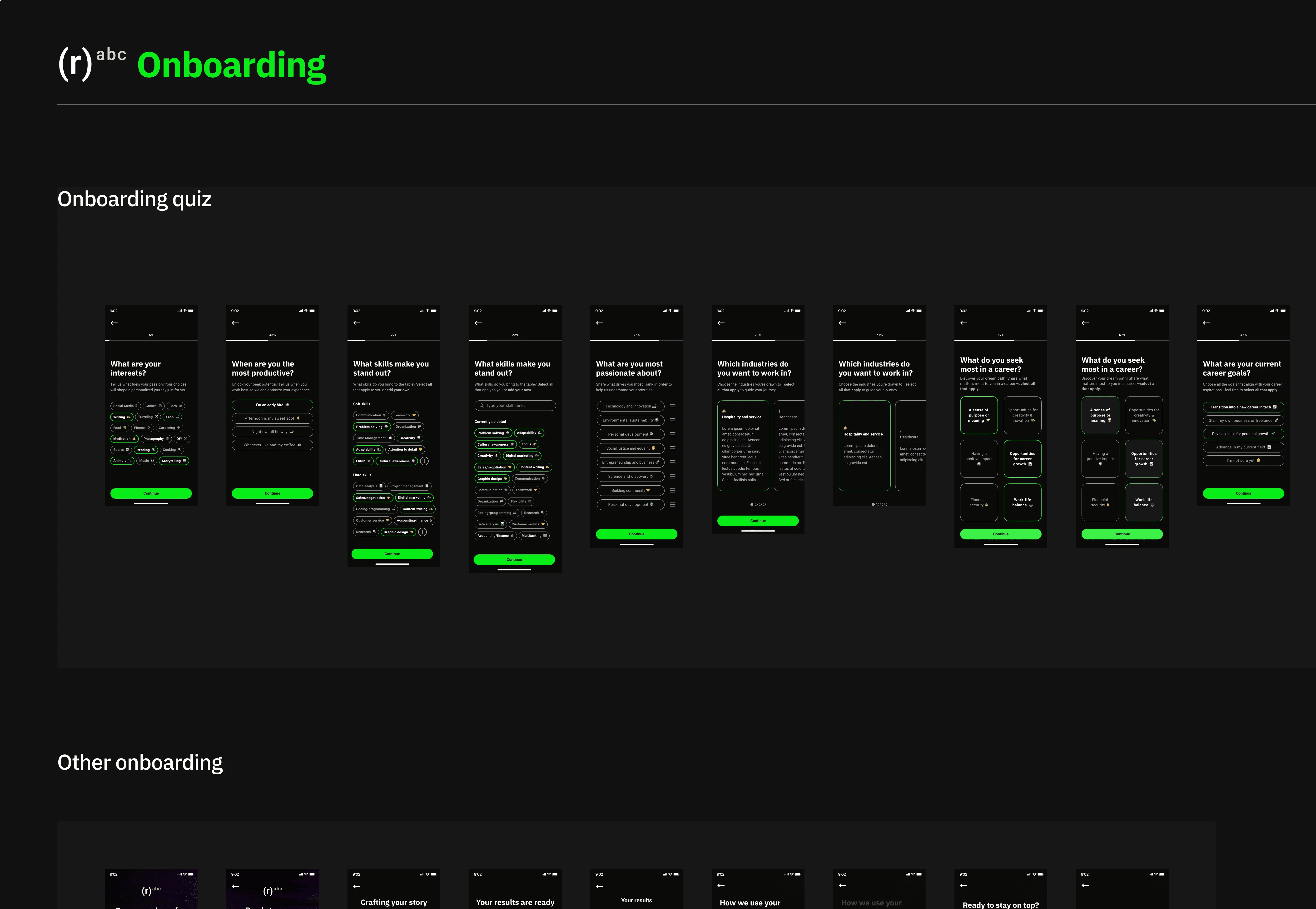
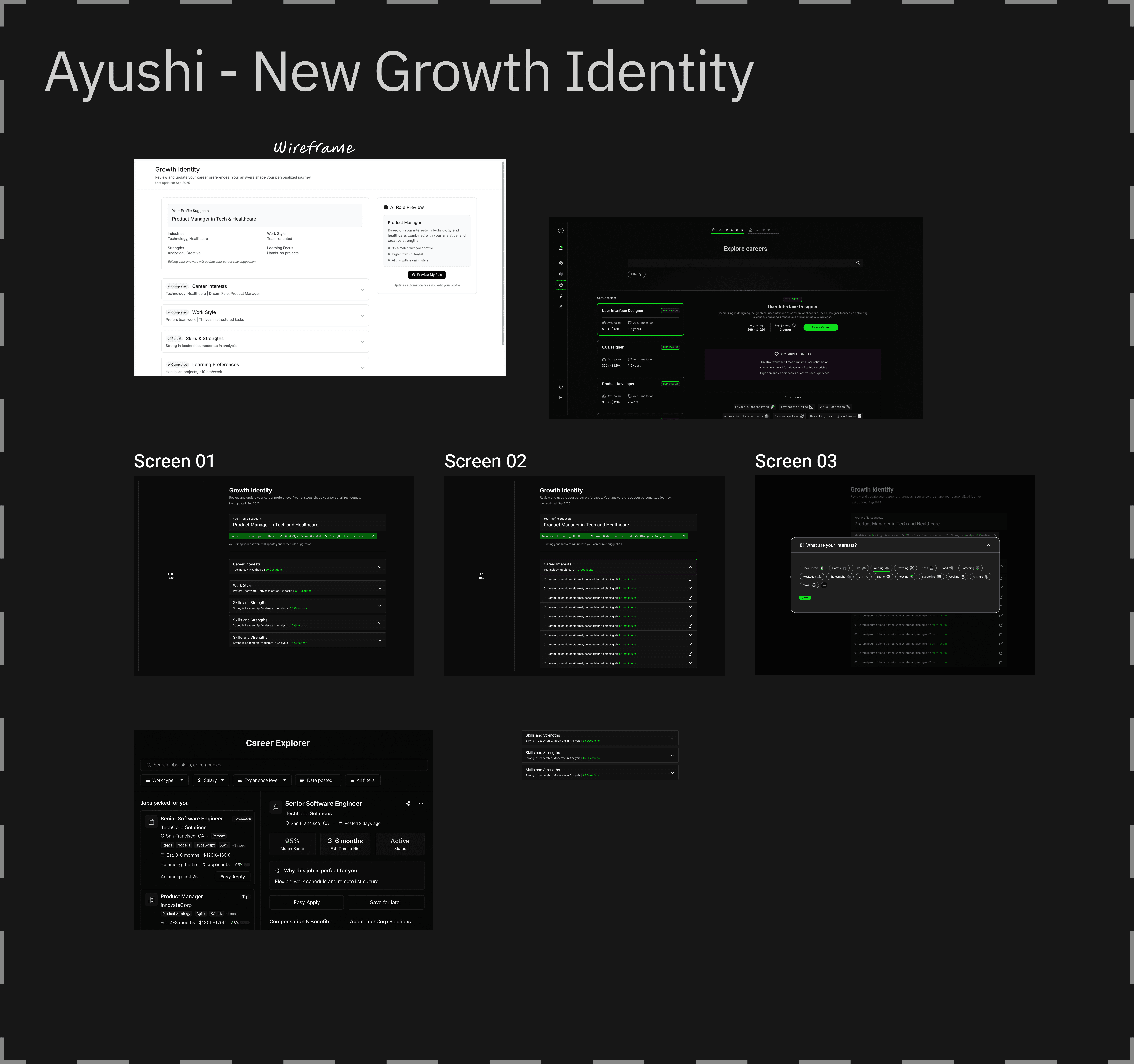
Below is the first version of converting the existing mobile designs (Left Image) into web designs (Right Image)
The Challenge
Balancing Data with Delight
To provide accurate career recommendations, the AI requires significant user input.
The Problem:
Our initial V1 onboarding felt like a 10+ question "interrogation." It was functional but created massive friction.
The Visual Direction:
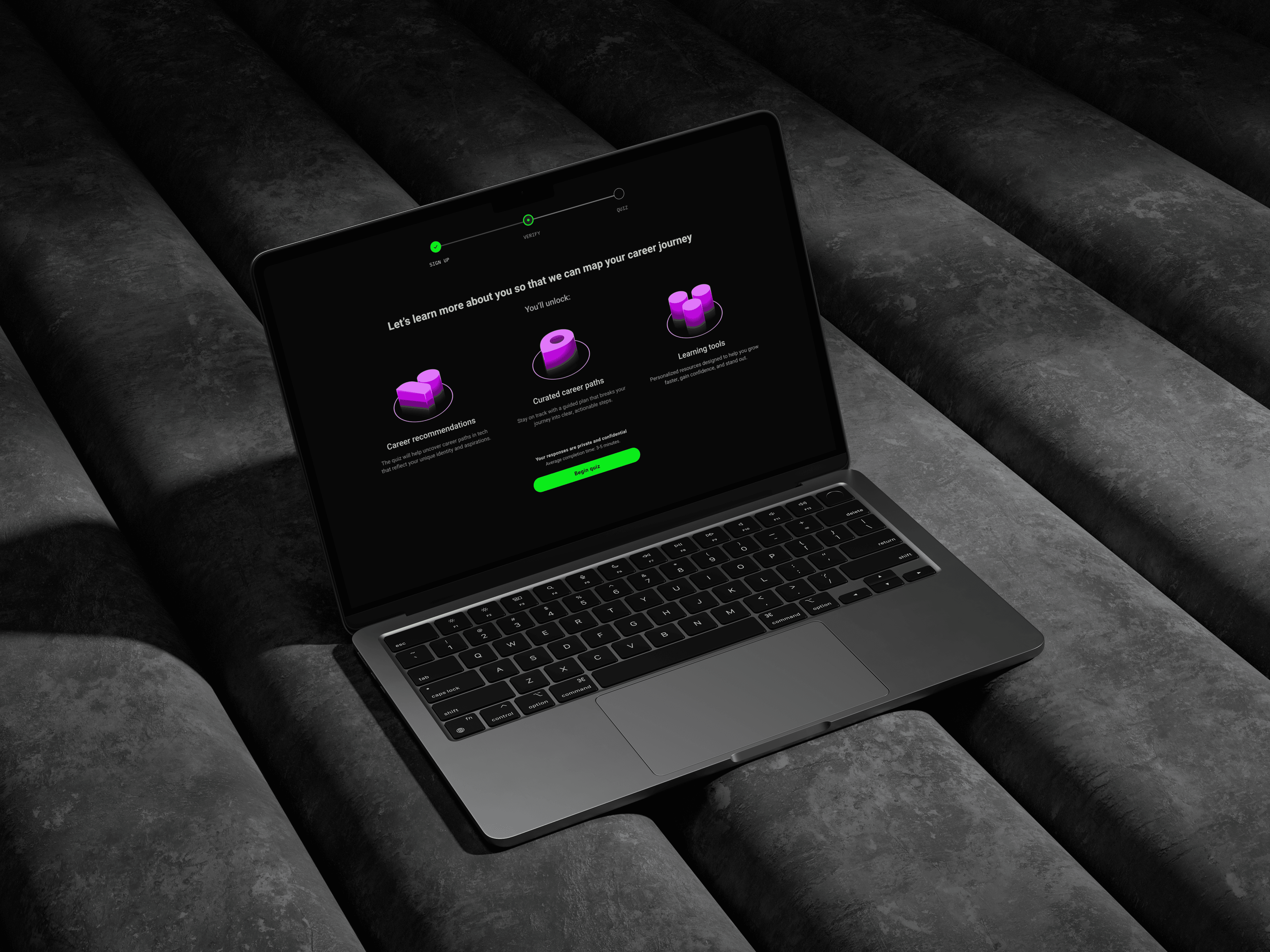
I leaned into a Brutalist aesthetic..bold, raw, and functional, using Google Gemini to generate 3D building blocks that gave the UI a distinct, structured personality.
The Pivot:
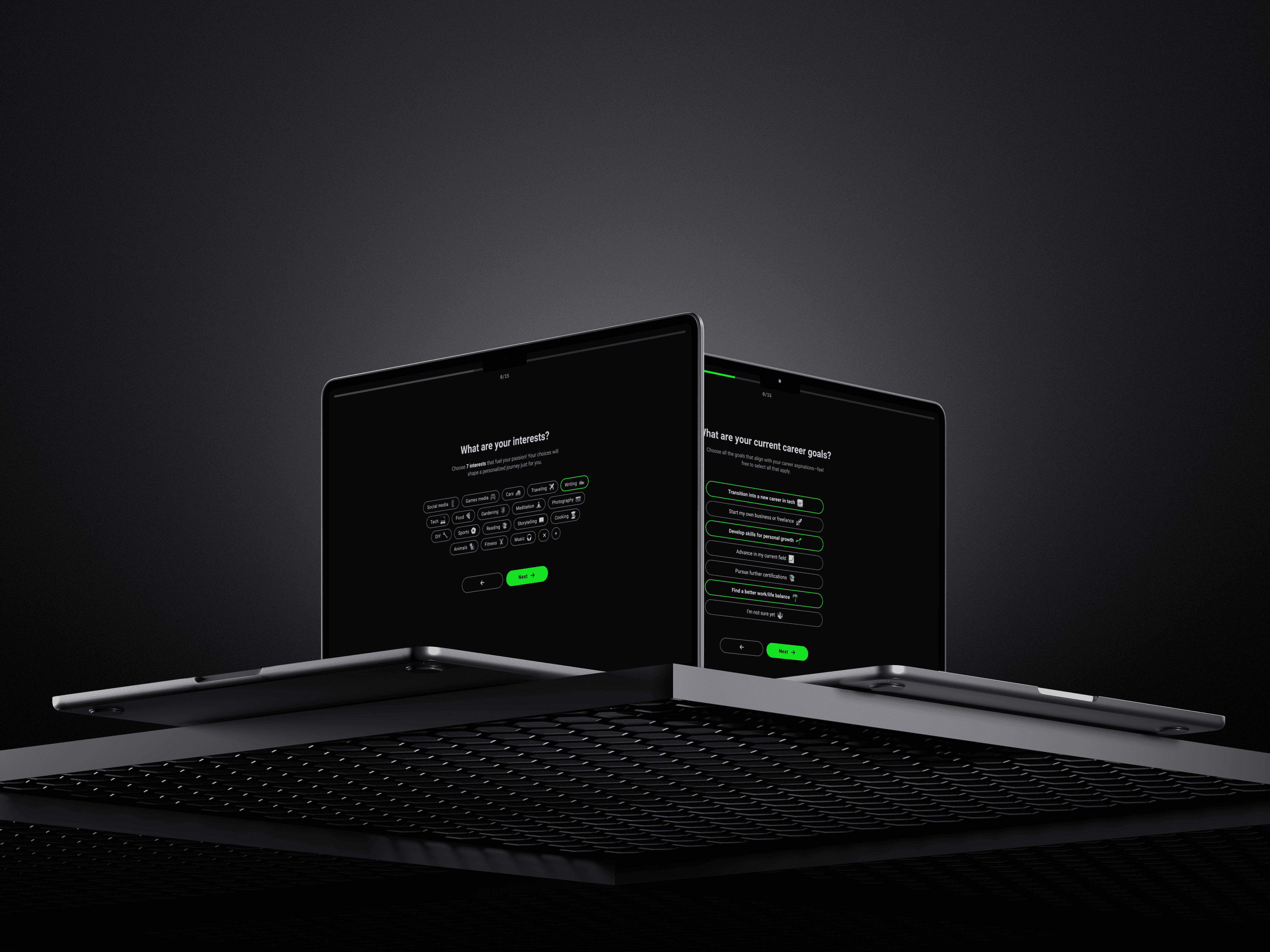
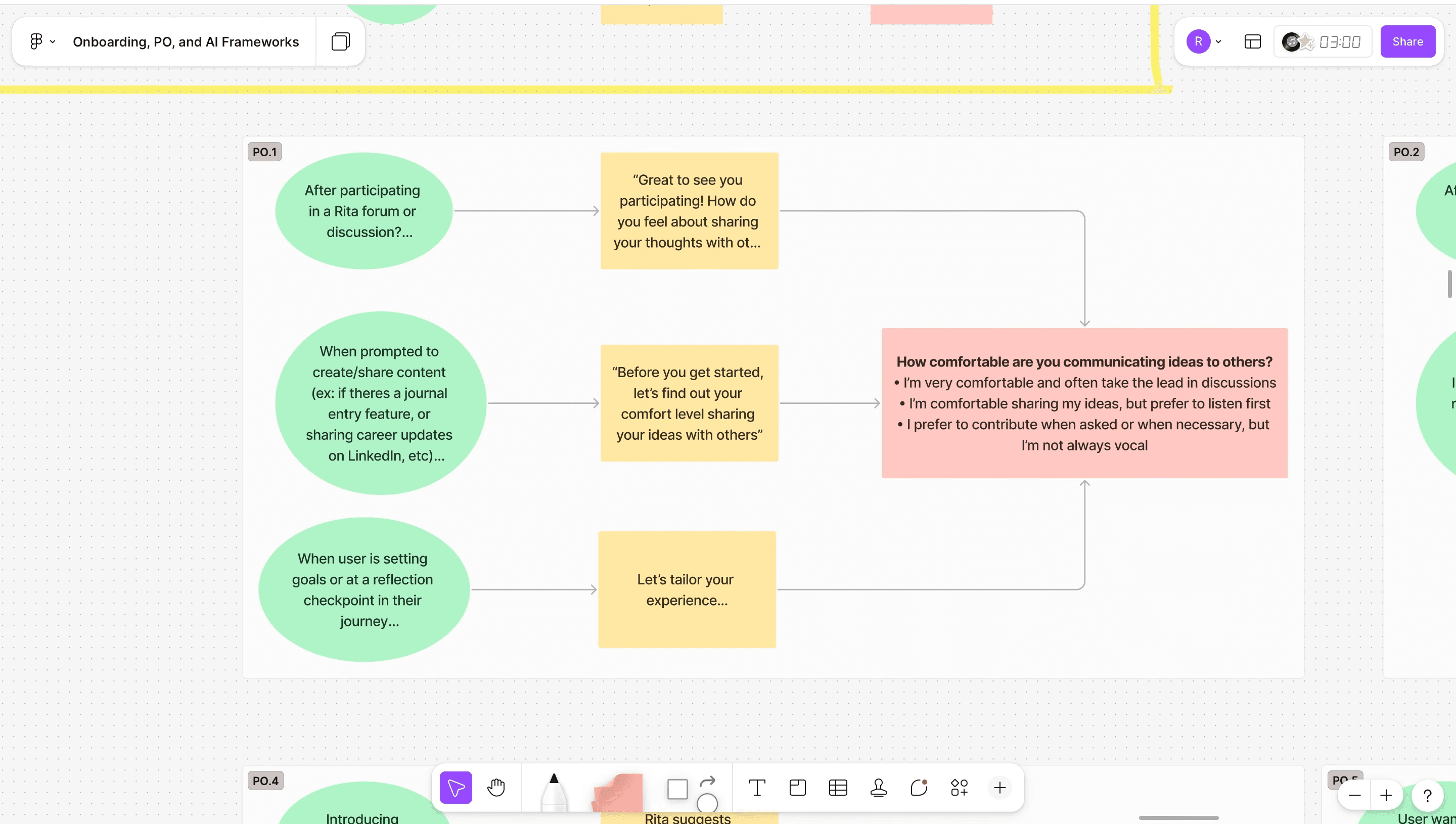
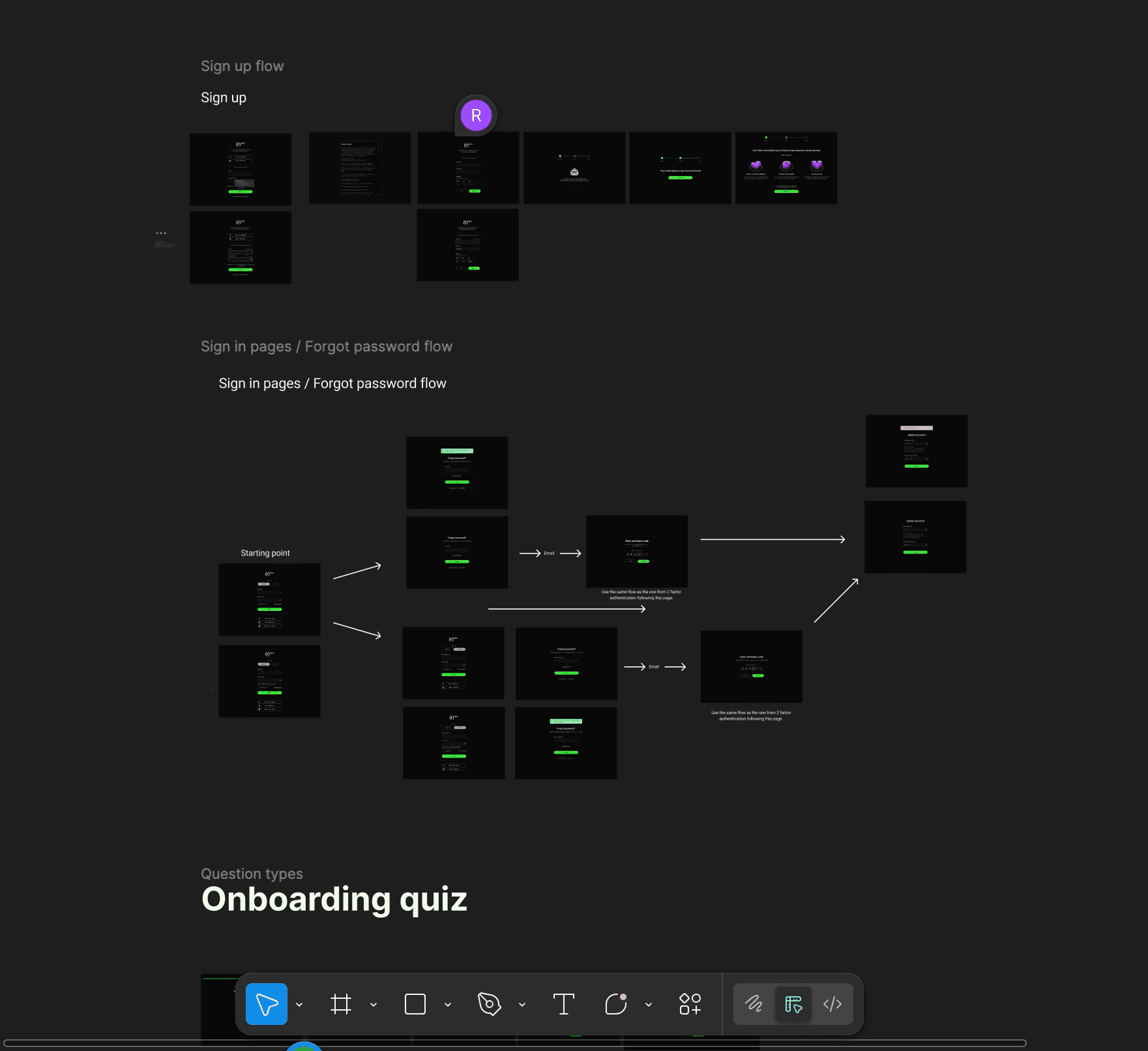
Working with the research team, we moved to Progressive Onboarding. Instead of a long upfront survey, we integrated questions into the user's natural exploration, allowing the AI to learn from the student's actions in real-time.
Quality through Rigor
Weekly Accessibility Audits
Designing for education means designing for everyone. A core part of our weekly rhythm was our commitment to inclusivity.
The Collaboration:
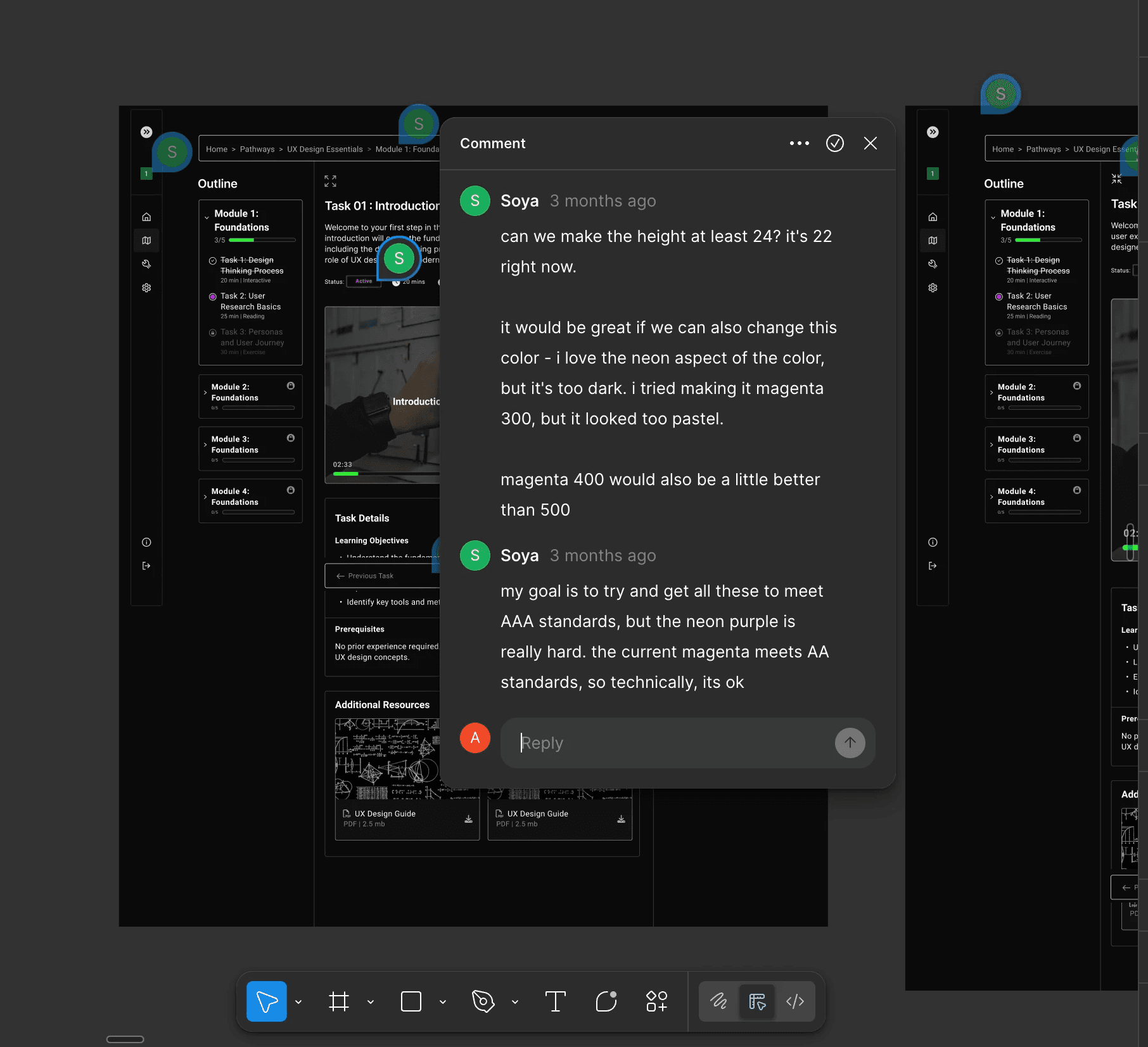
Every week, I met with our dedicated Accessibility Designer to review every new component and flow.
The Iteration:
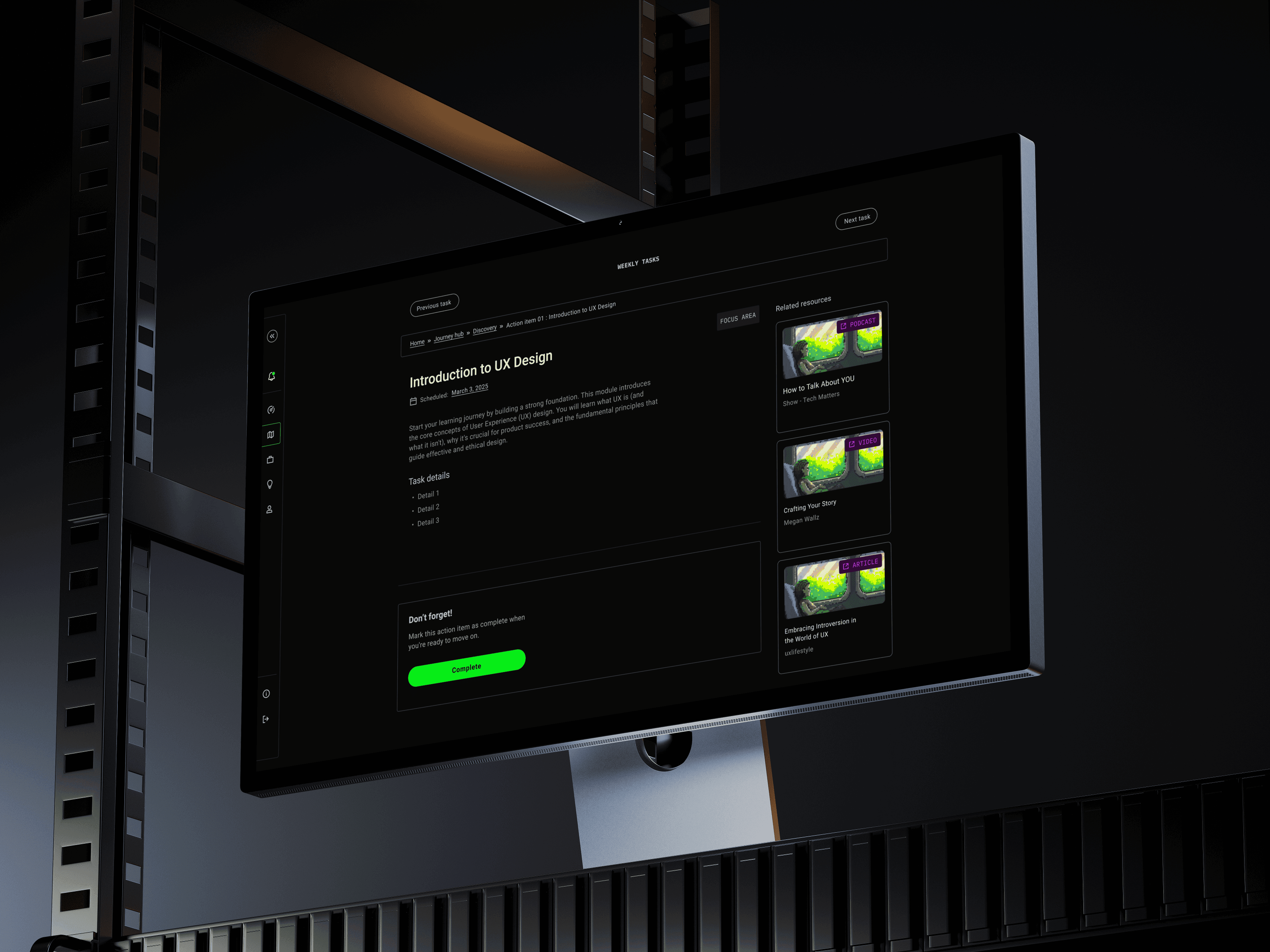
We didn't just check boxes; we redesigned based on these audits. This was especially crucial for our "Resources" and "Action Items" sections, where we had to ensure long-form information was digestible for users with diverse needs.
The Impact:
This process transformed our design system from a visual library into a robust, WCAG-compliant framework.

Current State: Agile Implementation
We are currently in the final polish and handoff phase, maintaining a high-velocity shipping cadence.
Synchronous Handoff:
I am currently working with the UX Lead to ship the Homepage and Profile pages. We meet weekly to refine the UI and immediately pass those updates to the development team.
The Outcome:
By shipping small and often, we ensure that the complex AI features we’ve designed are implemented with pixel-perfect precision.
The Impact
Strategic Pivot:
Successfully transitioned the product from a static mobile concept to a research-backed, scalable web ecosystem.
Friction Reduction:
Replaced a 10-question "onboarding wall" with a Progressive Onboarding strategy, balancing AI data needs with user retention.
Quality at Scale:
Established a weekly accessibility-first cadence, ensuring the Brutalist UI was as inclusive as it was bold.
Reflection
This project was a masterclass in designing for complexity. I learned that my role as a Lead isn't just to produce pixels, but to bridge the gap between aggressive AI data requirements and human psychology. Collaborating with an Accessibility Designer and Senior mentorship taught me to prioritize a high-velocity feedback loop, proving that even the most "brutal" and experimental aesthetics must be grounded in rigorous usability and technical feasibility.